MES (Manufacturing Execution System)
Manufacturing execution for electronics and SMT—with traceability, quality, and machine connectivity built in.
Our MES platform is built for electronics manufacturing, with a strong focus on Surface Mount Technology (SMT). It closes the gap between planning and execution: work orders run at stations, routing and data capture are enforced where you need them, and traceability evidence is preserved for quality and customer audits.
Highlights
- End-to-end traceability of panels and serial numbers through production steps—supporting audits and customer quality requirements.
- Live production visibility with data collected from equipment and stations—not only after-the-fact reporting.
- Flexible machine integration for mixed-vendor floors using configurable interfaces and field mapping.
Key features
Execution & traceability
Work orders, line setup, panel and serial tracking through defined routes—supporting complex electronics workflows.
Quality & visibility
Defect and reason codes, quality-oriented views, and integration with inspection and measurement workflows.
Inventory & materials
Material awareness tied to production where configured—aligning floor consumption with systems of record.
Machine & station integration
APIs and integration paths for equipment (e.g. AOI, SPI, FAI, stencil, conveyors) with flexible payload handling and documented contracts.
Operations & administration
Role-based access and configuration of processes, routes, and stations—for both operators and manufacturing IT.
Multi-site patterns
Deployments can span multiple sites or segregated environments while sharing common definitions where appropriate.
Target users
- Electronics manufacturers and EMS providers running SMT and related processes
- OEMs that need panel/serial traceability, WIP visibility, and connected inspection lines
- Teams onboarding mixed-vendor equipment without brittle one-off scripts everywhere
Benefits
- Fewer blind spots between orders, panels, serials, and stations
- Audit-ready genealogy instead of spreadsheets and manual exports
- Shorter time-to-production when new lines or machines come online
Product visuals
A curated set of interface examples—chosen to illustrate how information is structured and how teams work inside the product. Cropping uses a consistent frame so the page reads cleanly; a live session shows full screens, navigation depth, and your configuration options.
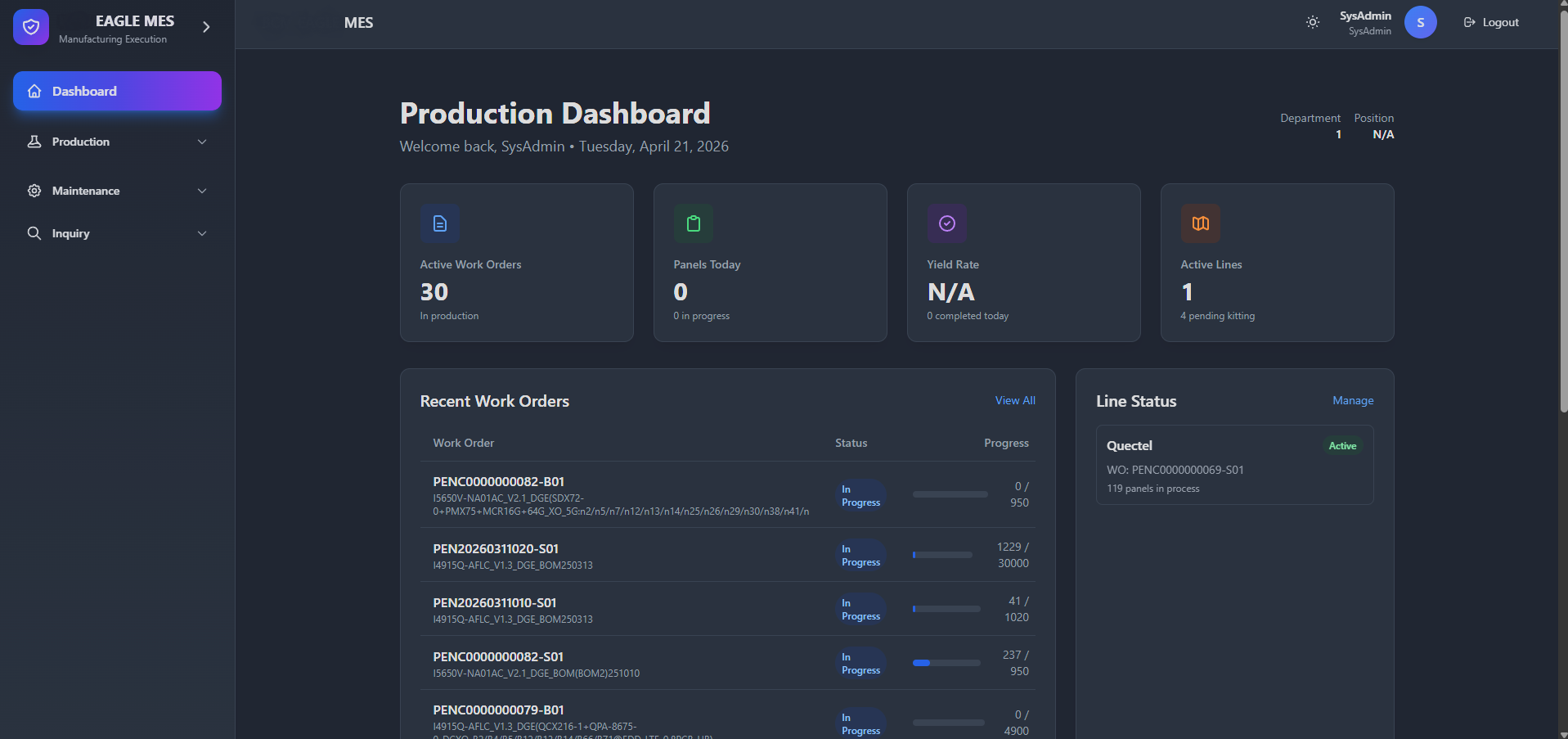
Operations view for live line status, work-in-progress, and throughput signals—so supervisors and manufacturing IT see what is running now, not only end-of-shift reports.
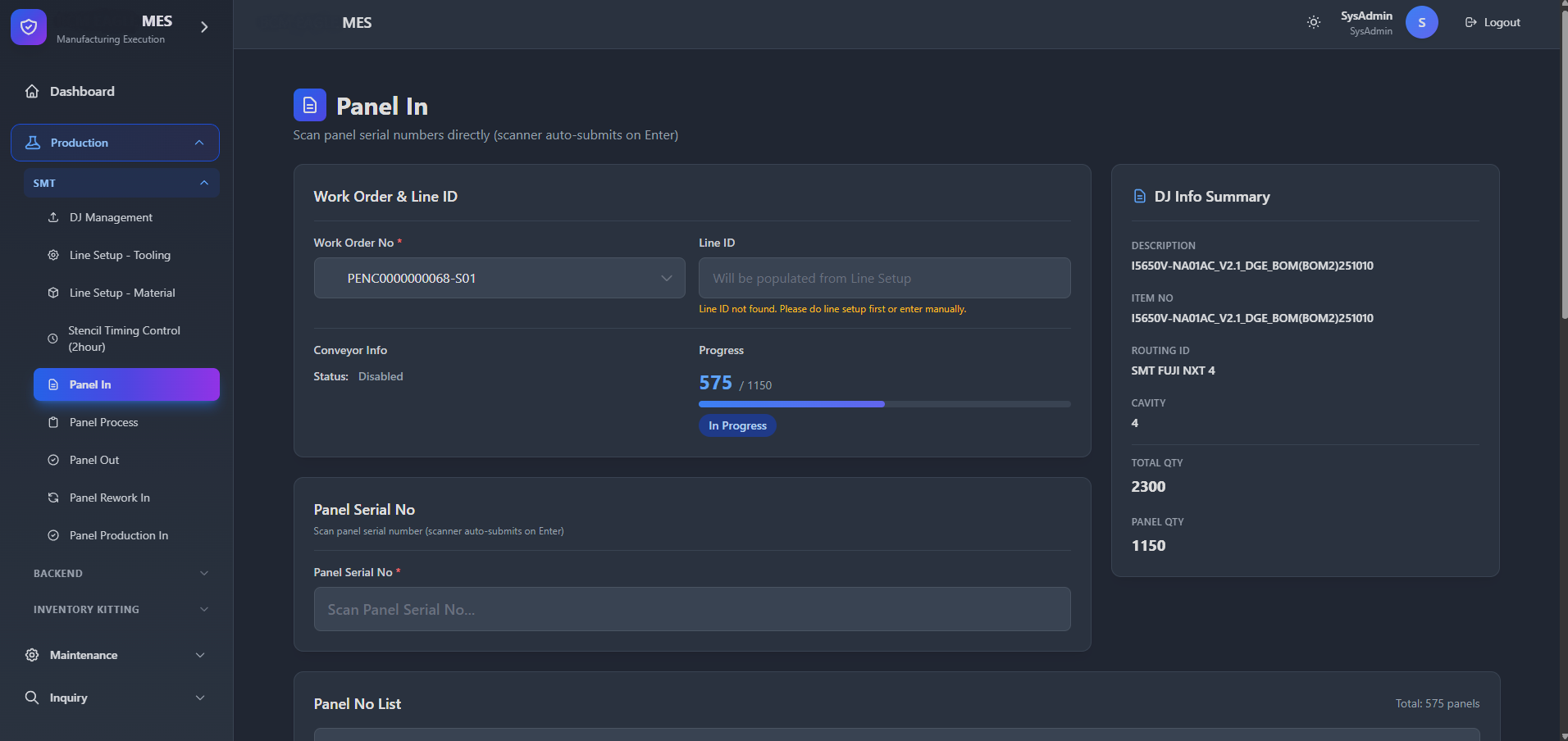
Station-level execution for panels and serials as they move through the route—supporting traceability evidence and consistent data capture at the point of work.
Next step
We’ll align on your environment, integration points, and rollout constraints—then propose a delivery plan with explicit milestones.